Description
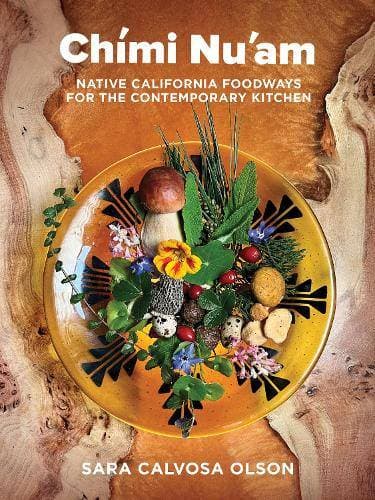
More than seventy delectable recipes that bring California’s Indigenous cuisines into kitchens today.Finalist for the 2023 Glenn Goldman Award for Cooking, Chosen by the California Booksellers AllianceIn this sumptuous cookbook, Sara Calvosa Olson (Karuk) reimagines some of the oldest foods in California for home cooks today. Meaning “Let’s eat!” in the Karuk language, Chími Nu’am shares the author’s delicious and inventive takes on Native food styles from across California. Over seventy seasonal recipes centered on a rich array of Indigenous ingredients follow the year from Fall (elk chili beans, acorn crepes) to Winter (wild boar pozole, huckleberry hand pies) to Spring (wildflower spring rolls, peppernut mole chicken) to Summer (blackberry braised smoked salmon, acorn milk freezer pops). Special sections offer guidance on acorn preparation, traditional uses of proteins, and mindful ingredient sourcing.Calvosa Olson has spent many years connecting her family’s foodways with a growing community, and these recipes, techniques, and insights invite everyone to Calvosa Olson’s table. Designed as an accessible entry for people beginning their journey toward a decolonized diet, Chími Nu’am welcomes readers in with Calvosa Olson’s politically attuned and irresistibly funny writing. With more than 100 photographs, this cookbook is a culinary gift that will add warmth and mouthwatering aromas to any kitchen.Table of ContentIntroduction Ayukîi About Me How to Use This Book Equipment and Specialty Foods Proteins Fall Pimnaníhkaanva Acorn Guide Rustic Acorn Bread Blackberry Smoked Salmon Smörgåstårta Acorn Pumpkin Muffins Acorn Manzanita Waffles Acorn Miso Acorn Miso Soup with Tanoak Mushrooms Acorn Miso Creamed Kale Three Sisters Fall Salad Squash Frybread Elk Chili Beans Stuffed Mini Pumpkins with Ground Venison Sausage and Currants Apple Cider Brined Turkey with Apple Brandy Acorn Gravy Acorn Crepes Turkey and Wild Mushroom Crepes Cajeta Apple Pie Crepes Maple Cheesecake with Pine Nut and Acorn Crust NDN Whoopie Pies Winter Íshyaav The Acorn Maidens Winter Preserving Mussels and Mushrooms on Acorn Bread Winter Squash with Bay Leaves Winter Quail Stock Quail and Acorn Dumpling Stew Elk Cottage Pie Rabbit and Dungeness Paella Red Chile Rabbit Tamales White Tepary Bean Soup with Ham Hock and Collards Cataplana Wild Boar Pozole Deer Meat Stew and Grits Coffee and Juniper Brined Venison Acorn Hand Pies Basic Acorn Pie Crust Miso Smoked Salmon Chowder Hand Pies Huckleberry Hand Pies Hot Peppernut Cocoa with Mallow Root Marshmallows California Galette Buttermilk Chocolate Acorn Quick Bread Spring Xátikrupma Spring Gathering Guide Corine Pearce Infusions Decoctions Compresses Poultices How to Dehydrate Nettles or Lamb’s Quarters Morel Preparation How to Dehydrate Mushrooms and Morels Tree Tip Syrups, Sugars, and Oils Niçoise Salad with Pickled Sea Beans and Quail Eggs NDN Lettuce and Popped Amaranth Salad with Lemon Pine Nut Vinaigrette Spring Mushroom Stock Cream of Woodland Mushroom Soup Acorn Miso Balls and Dashi with Pacific Seaweed and Dried Mushrooms Acorn Crackers with Edible Flowers and Wild Onion Dip and Acorn Hummus Wildflower Spring Rolls Peppernut Mole Chicken with Nettle Tortillas and Nettle Poblano Rice Duck Egg Chilaquiles with Nettle Tortilla Chips Wild Rice Gatherer’s Bowl Stinging Nettle Risotto with Cumin Coriander Lamb Chops and Acorn Squash with Burrata, Hazelnuts, and Barberries Meadow Quiche Acorn Focaccia with Wild Edibles Pea Pancakes with Lemon Cream, Smoked Salmon, and Quail Eggs Big Leaf Maple Blossom Fritters with Spruce Tip Syrup Summer Pimnáanih Summer Spaghetti Sauce Wild Meatballs Summer Corn Stock Blackberry Smoothie Bowl with Hazelnut Granola Three Sisters Summer Salad Quail “Chicken Salad” with Cherry Plums and Black Walnuts Watermelon Salad with Yerba Buena Greek Salad with Smoked Trout Summer Grape Leaf Wraps Huckleberry Gazpacho with Smoked Salmon Pine Pollen Cacio e Pepe Blackberry Brined Smoked Salmon Blackberry Braised Venison Tacos Elk Medallions with Acorn Miso Rub Acorn Milk Freezer Pops Acorn Milk and Chia Pops with Salmonberry Chamoy Rose-Ade and Elderflower Freezer Pops Blackberry “Chiascake” Freezer Pops Zucchini Acorn Bread with Black Walnuts and Chocolate Chips Blackberry Curd and Maple Angel Food Cake Blackberry Pie with Acorn Crust Acknowledgments Index About the AuthorReview QuoteFinalist for the 2023 Glenn Goldman Award for Cooking, Chosen by the California Booksellers Alliance"This cookbook designed to uplift Indigenous California foods will delight foragers, adventurous home cooks, and those looking to connect with Native roots. It's a valuable addition to library shelves that will connect Native and non-Native Americans to the earth and its abundant gift of ingredients." —Library Journal"With Chími Nu'am, Olson looks to encourage people to start thinking about a decolonized diet, connecting to the land and native ingredients prior to European colonization [... and] aims to make Indigenous ingredients and traditional Karuk recipes accessible to a whole range of home cooks." —Nina Friend, BBC World's Table"Chími Nu’am is serious about taking a holistic view of reintegrating the healthfulness of traditional diets into modern lives, benefiting both personal well-being and the greater good." —Naomi Tomky, Atlas Obscura"Calvosa Olson has written a book that will speak to multiple audiences. But whether she's guiding Indigenous readers to embrace more of their cultural foods or making recommendations for non-Indigenous readers interested in decolonizing their diets in an ethical way (hint: it's about reciprocity), her voice and philosophy come through clearly on the page." —Twilight Greenaway, Civil Eats"To say that Chími Nu'am is just a cookbook is inaccurate. What took Calvosa Olson more than two years to write and publish is an expression of her life and an act of stewardship for the earth. [...] The author was raised to believe that if you take care of the land, the land will take care of you." —Prism"Calvosa Olson invites readers to forage for and become more attuned to Indigenous and seasonal ingredients—nurturing a deeper connection to place and enhancing one’s role as an environmental steward." —Uprooted"Connecting with nature is an approach to cooking that is often overlooked—but not for Sara Calvosa Olson. A native Californian raised by a Karuk mother, she is leading people on a path to decolonize their diets, one cup of manzanita flour at a time." —KCRW Good Food"Connection to people and planet is central to both Calvosa Olson's personal approach to food as well as the message of Chími Nu'am." —Rachel Askinasi, The Messenger"Besides being a creative, accessible cookbook, Calvosa Olson's work is a call for stewardship of the environment and an introduction to some local foods that have long been part of Native diets. It’s a terrific resource for foragers, teachers, libraries, classrooms, cooks, and anyone looking to learn more about the foodways of California's Indigenous peoples." —Edible East BayBiographical NoteSara Calvosa Olson (Karuk) is a food writer and editor living in the Bay Area with her husband and two teenage sons. Her work dwells at the intersection of storytelling, Indigenous food systems, security, sovereignty, reconnection, and recipe development. Her writing has appeared in News from Native California and Edible Shasta-Butte. Visit her website at akihsara.com, and follow her on Instagram at @thefrybreadriot. She lives in Mill Valley, California, which is the unceded ancestral homeland of the Coast Miwok.EXCERPT FROM THE INTRODUCTION: "Ayukîi"This book was written from my home on Huimen Coast Miwok lands. I’m profoundly grateful for the advanced and skillful stewardship of the Miwok people—their strong reciprocal relationship with the land is why this area is so beautiful and abundant. Because of their energy, immense amount of scientific knowledge, compassion, and commitment, I know the land still retains a deep love for people. Yôotva, I am glad to have had the opportunity to walk among your original ancestors.Most people tend to bisect the state of California into two distinct cultural factions: Northern California and Southern California. But this land of rivers, deserts, mountains, valleys, prairies, wetlands, lakes, and more than 800 miles of Pacific Ocean coastline is home to a vast number of different tribes with unique and separate identities and cultural lifeways, in addition to waves of diasporic cultural influences.Even if many tribes are still unrecognized by the U.S. government, their impact on the abundance of this land is evident in every nook and valley of this state. Many of our foodways intersect and seamlessly blend with one another throughout the state while still maintaining dynamic and unique cultural differences. If our foodways are bookended by acorns, a food eaten by people in both the north and the south, then there is an entire library of food combinations in between. This book is meant to be inclusive of but not representative of that library. I hope people from all parts of California (and beyond) will be able to connect to some portion of this book. I have deliberately held back traditional and ceremonial recipes in an effort to draw a line between how we prepare our ancestral foods versus the foods Native people make in their modern kitchens using ancestral ingredients. These recipes take a new look at some of the oldest foods in California, in an effort to connect to a greater holistic picture that includes everybody.[...]I wrote this book because I want to be in service of my people, of all tribal peoples and elders and my great-great-great-grandchildren. Though this book is about starting slow, I want to impress upon everybody the urgency with which we must act to keep our ecosystems healthy and our air clean and eliminate our dependence upon fossil fuels and other extractive industries. I want us all to wake up