Description
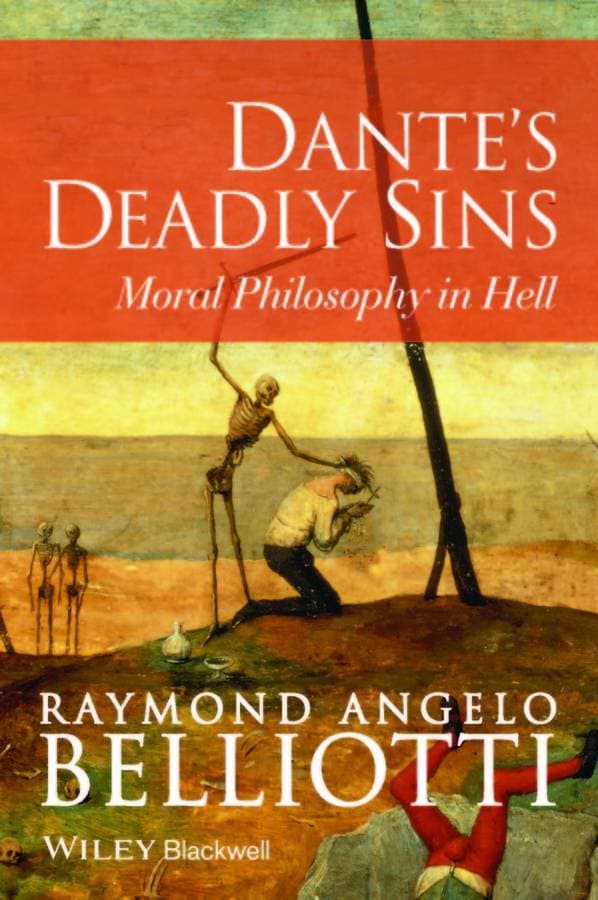
Dante’s Deadly Sins is a unique study of the moral philosophy behind Dante’s master work that considers the Commedia as he intended, namely, as a practical guide to moral betterment. Focusing on Inferno and Purgatorio, Belliotti examines the puzzles and paradoxes of Dante’s moral assumptions, his treatment of the 7 deadly sins, and how 10 of his most powerful moral lessons anticipate modern existentialism. Analyzes the moral philosophy underpinning one of the greatest works of world culture Summarizes the Inferno and Purgatorio, while underscoring their moral implications Explains and evaluates Dante’s understanding of the ‘Seven Deadly Sins’ and the ultimate role they play as the basis of human transgression. Provides a detailed discussion of the philosophical concepts of moral desert and the law of contrapasso, using character case studies within Dante’s work Connects the poem’s moral themes to our own contemporary condition Table of Content About the Author x Preface xii The Rationale xii The Origin xiii Acknowledgments xvii Introduction 1 The Historical Context 1 The Life of Dante 3 Later Writings 8 The Commedia 12 Dante’s Death 14 Aims of this Book 15 Dante as Moral Philosopher 17 1 Inferno 19 Dante’s Mission 19 The Journey Begins 20 Vestibule (Ante-Hell): The Indecisive Neutrals 21 Upper Hell: Sins of Unrestrained Desire (the Wolf) 23 River Styx, Walls of the City of Dis 28 Lower Hell: Sins of Malice Leading to Violence (the Lion) 30 Lower Hell: Sins of Malice Leading to Fraud (the Leopard) 34 Dante’s Existential Lessons in Hell 46 2 Purgatorio 48 Purgatory in a Nutshell 48 The Journey Continues 50 Ante-Purgatory: Late Repentants 50 Gate of Purgatory 56 The First Three Terraces: Misdirected Love 57 The Fourth Terrace: Deficient Love of the Good 62 The Final Three Terraces: Excessive Love of Secondary Goods 64 Dante’s Existential Lessons in Purgatory 71 3 The Notion of Desert and the Law of Contrapasso 73 The Notion of Desert 73 The Contrapasso 81 The Problem of Proportionality 87 First Case Study: Francesca 90 Second Case Study: Brutus and Cassius 92 Third Case Study: Epicurus 99 Dante’s Moral Conception 102 4 Paradoxes and Puzzles: Virgil and Cato 104 The Paradox of Virgil 105 Summary of the Paradox of Virgil 111 The Strange Case of Cato 116 “The Perfect Stoic” 117 Dante’s Decision 120 Dante and Conflict 123 5 The Seven Deadly Sins 124 Historical Background 124 Superbia (Pride) 127 Invidia (Envy) 129 Ira (Wrath) 133 Acedia (Sloth) 137 Avaritia (Avarice) 138 Gula (Gluttony) 139 Luxuria (Lust) 140 The Antidote: Righteous Love 142 The Bridge to Salvation 148 6 Dante’s Existential Moral Lessons 149 Dante and Existentialism 149 Jean-Paul Sartre and Hell 150 Dante’s Ten Existential Lessons 157 Individualism and Community 176 Personal Strategies 179 Bibliography 185 Index 193Review Quote “In this thought-provoking book Belliotti draws Dante’s Commedia into conversation with existentialist philosophy. . . Despite these questions, Belliotti’s book is essential reading for anyone interested in Dante. In it the reader will find a refreshingly different take on the moral vision underscored by Dante’s Commedia.” (The Heythrop Journal, 24 July 2015)Biographical Note Raymond Angelo Belliotti is SUNY Distinguished Teaching Professor of Philosophy at the State University of New York at Fredonia. Belliotti’s publications include Niccolò Machiavelli (2008), Roman Philosophy and the Good Life (2009), Posthumous Harm: Why the Dead are Still Vulnerable (2011), Shakespeare and Philosophy: Lust, Love, and Law (2012), and Jesus or Nietzsche: How Should we Live Our Lives? (2013). Belliotti has received the SUNY Chancellor's Award for Excellence in Teaching, the William T. Hagan Young Scholar/Artist Award, the Kasling Lecture Award for Excellence in Research and Scholarship, and the SUNY Foundation Research & Scholarship Recognition Award. The Commedia, Dante’s powerful vision of the afterlife and human punishment, is one of the great works of world culture. In Dante’s Deadly Sins, Raymond Angelo Belliotti expertly draws new and unique insights from the poem, analyzing it in moral terms that connect the poem’s themes to our own contemporary condition. In so doing, Belliotti demonstrates remarkable parallels between this classic piece of literature and modern life. Dante’s Inferno and Purgatorio are permeated with disturbing images of sinners who become their sins: gluttons mangled and themselves consumed, the lustful forever caught in a chaotic wind. Belliotti emphasizes the moral implications of these poems, explaining and evaluating Dante’s understanding of the "Seven Deadly Sins" and the ultimate role they play as the basis of human transgression. By examining the Commedia as a work of moral philosophy rather than a historical account of Dante’s firm belief in Christian theology, Belliotti considers Dante’s master work as it was intended – namely, as a practical guide to moral betterment. Revealing a broad framework for leading a good life that can be shared by both religious believers and secular existentialists, Dante’s Deadly Sins demonstrates that Dante and existential philosophy have much to teach us about living a meaningful life. "Belliotti demonstrates remarkable parallels between Dante's moral vision and modern Existentialist philosophy. He skillfully elucidates moral possibilities that we too confront when challenged by evildoing, punishment, freedom, and love." —Robert Ginsberg, Director, The International Center for the Arts, Humanities, and Value Inquiry "Most engaging about this work is the author's distinctive vision and voice, his capacity to bring together unexpected combinations of thought and style in ways that are insightful and productive. This is a work informed by broad learning, yet comfortable with personal anecdotes and pop culture references. As an exploration of classic literature as the source of philosophical engagement, it is original and thought-provoking." —Jeffrey Nesteruk, Franklin & Marshall College