Description
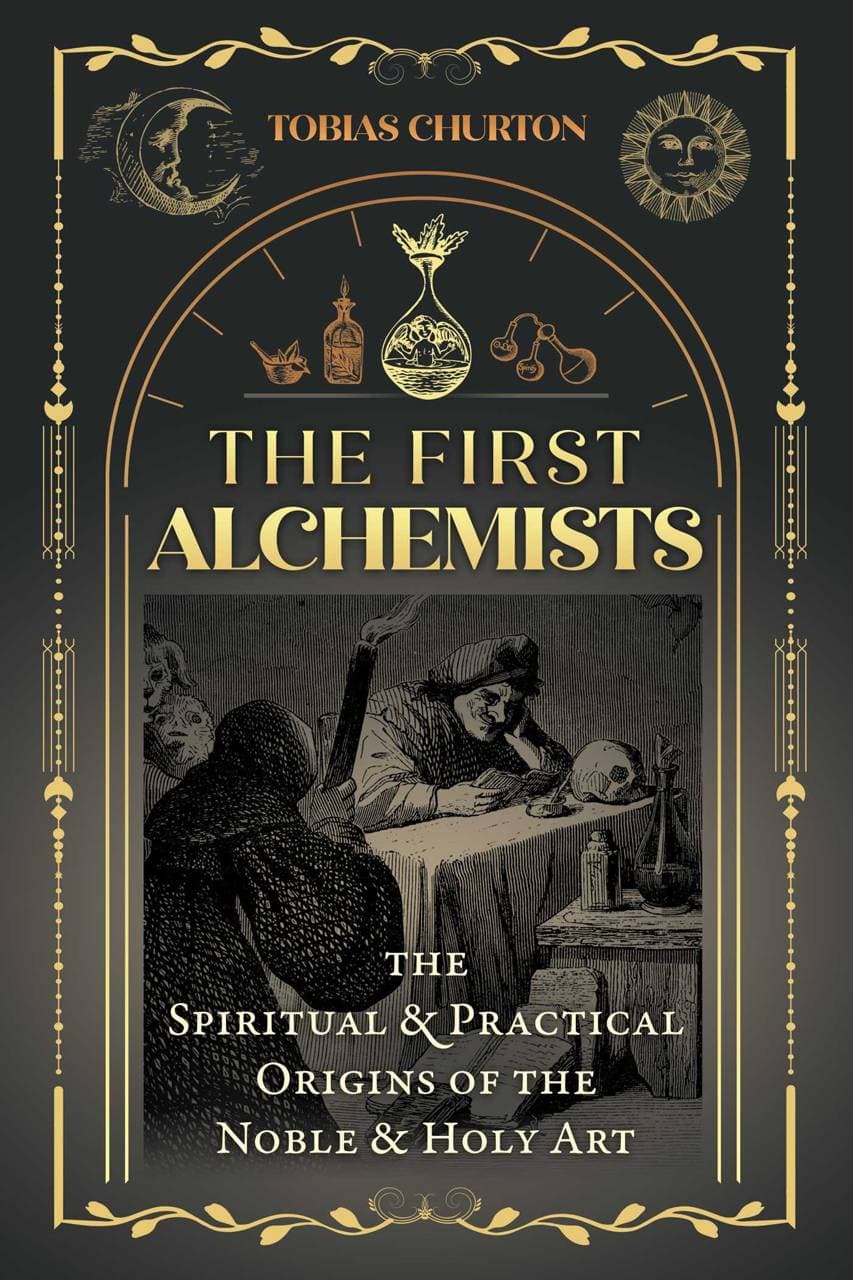
Explores the origins and practices of early alchemy. Investigating the origins of alchemy and the legend of the Philosopher’s Stone, Tobias Churton explores the oldest surviving alchemical texts, the original purpose of the “Royal Art,” and the first alchemists themselves. He reveals the theories and philosophies behind the art and how early apparatus and methods were employed by alchemists through the ages. Showing how women dominated early alchemy, Churton looks at the first known alchemist, the Jewess Maria the Prophetess, inventor of the bain marie, still in use worldwide today. He also looks at early alchemist Cleopatra (not the well-known Egyptian queen) and 3rd–4th century Egyptian female artisan Theosebeia, who had a guild of adepts working under her. He examines in depth the work of Zosimos of Panopolis and shows how Zosimos’s historic work inspired the medieval view of alchemy as an initiatory path whose stages follow the transmutation of base metals into gold. Exploring the latest research on early practices in Upper Egypt, the author discusses the political and industrial realities facing the first alchemists. He examines the late antique “Stockholm” and “Leiden” papyri, which offer detailed knowledge of the first known Greco-Egyptian chemical recipes for gold and silver dyes for metal and stone, and purple dyes for wool. He emphasizes how changing color in early alchemy was misinterpreted to imply transmutation of one metal into another. He reveals how the alchemical secrets for working with the “living statues” of the Egyptian temples was jealously guarded by the priesthood and how secrecy helped to reinforce beliefs that alchemical knowledge came from forbidden, celestial sources. He also investigates the mysterious relation between alchemy, spiritual gnosis, Hermeticism, and the Book of Enoch. Revealing the hidden legacy of the early alchemists, Churton shows how their secret workings provided a transmission line for ancient heretical doctrines to survive into the Renaissance and beyond.Table of ContentFOREWORDby Frank van Lamoen Introduction ONE Ancient Recipes for Gold— and Other Things Discoveries at ThebesA Theban Magical Library? The Leiden Papyrus Papyrus V Papyrus W Papyrus X The Stockholm Papyrus Pseudo-Democritus TWOThe Origins of Alchemy in Roman Egypt Akkadian Origin of Chēmeu? Heat and Glass THREE The Pioneers of Graeco-Egyptian- Jewish Alchemy Cleopatra Jewish Chemistry Mary the “Prophetess” FOUR Zosimos I Clearing the Decks Was Zosimos an Egyptian Priest? FIVE Zosimos II Alchemical Yoga Practical Dreaming SIXZosimos III From Omega to the Final Quittance On Destiny, Fate, Worldly Thought, and Noetic Understanding The First Book of Zosimos the Theban’s Final Account SEVEN What Did the First Alchemists Do? Making Talismans? EIGHT How Did They Do It? Sulfur Water; Divine Water Apparatus Putting the First Alchemists to the Test NINE Where Did They Do It? A Hermetic “Lodge”? A Guild for Theosebeia? Laboratories? TEN The Myth of Transmutation Philosophical Background The Stone The Tome of Images Myth and Reality ELEVEN Forbidden Knowledge TWELVE A Strange RelationAlchemy and Gnosis Mercury and Christ THIRTEEN Legacy Arabic Alchemy The Inheritance “Good Health!” Notes Bibliography IndexReview Quote“In this remarkable and necessary work on early alchemy, Churton outlines a program of research and experimentation into this rich but mostly unexplored area of Greco-Egyptian alchemical philosophies and practices. The depth and range of the material are breathtaking, and it is very satisfying to see the topic of glass addressed so thoroughly. I strongly recommend studying and working with The First Alchemists and going deeper, letting Tobias Churton light the way.”Review Quote“The subject of alchemy has always been shrouded in dense fog. Here at last is a book that probes deeply and lucidly into this age-old pursuit, taking us right back to its roots in the Middle East, examining seminal sources and investigating key avatars of alchemy—of both ancient and more recent times—and what precisely they were trying to achieve. Alchemy has both a practical and a spiritual side. Tobias Churton, writing with his customary eloquence, shines a clear light on both aspects.”Biographical NoteTobias Churton scholar, lecturer, composer, and religious TV director, is author of 27 published books, including biographies of William Blake, Aleister Crowley, G. I. Gurdjieff, and Elias Ashmole. A theology graduate of Brasenose College, Oxford, he was appointed Honorary Fellow in 2005 to lecture in Western Esotericism at Exeter University and is Britain’s leading scholar in the field, specializing in Gnostic, Hermetic, Rosicrucian, biblical, and Masonic studies. Invited to join Professor Boccaccini’s Enoch Seminar in 2019, his most recent books include Aleister Crowley in Paris and The Lost Pillars of Enoch.