Description
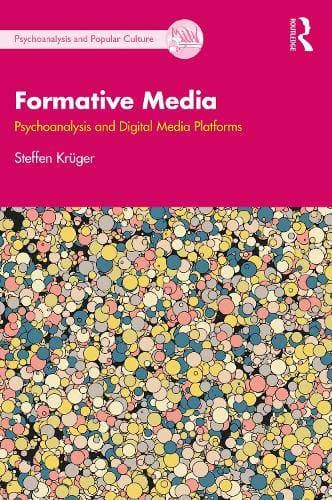
Formative Media presents a psychoanalytic and psychosocial inquiry into the significance of the most widely used digital platforms – including Facebook, Google, YouTube, Twitter (X), and Instagram – and the relational styles that users cultivate and habituate in their interplay with these platforms.Steffen Krüger assesses the formative effects of these platforms, considering who we are and how we are becoming who we are in relation to, as well as mediated through, digital platforms. The book considers Facebook in conversation with the Freudian theory of Eros and the Live/Love drive, then homes in on the primitive forms of orality, attachment, dependence, and symbiosis in relation to YouTube. Krüger then expands the discussion of orality with an inquiry into the notions of mastery, control, and domination that Google unfolds and activates in its search function, considers narcissism in the context of Instagram, and examines hate speech and aggression on Twitter. The book focuses on the most salient, most talked about aspects, features, and activities of commercial, corporate social media culture to inquire into the formational pushes and pulls of these activities in their contexts for our subjectivities and sense of self.Showing in detail how digital media platforms have advanced into central “socialisation agencies,” Formative Media will be of great interest to academics and scholars of psychoanalytic, psychocultural, and psychosocial theory, critical digital media studies, and interactional theory.Table of ContentAcknowledgements Series Preface Introduction – the forms of formative mediaChapter 1Outrageous growth and the Eros of FacebookChapter 2The feeding tube – YouTube, oral cravings, and the question of addictionChapter 3Anxious narcissism – Instagram, self-image practices, and the persistent question of narcissismChapter 4Compromised formations – Google, obsession and the desublimation of knowledgeChapter 5The joke that isn’t funny anymore – Twitter, aggression and the perfect shitstormChapter 6Conclusion – ‘platforming’ the digital subjectBibliography Review Quote"Krüger's brilliant study propels digital media analysis to the next level. Our primary concern in an age of platforms is formation, not information. What kind of subjects are we becoming?” - Jodi Dean, author, Democracy and Other Neoliberal Fantasies“At a time where critical analysis of platforms is more needed than ever, this book is essential reading for academics, students and anyone concerned about the fragile future of humanity and the digital. It is a pathbreaking, refreshing and absorbing contribution to internet studies, social media and platform studies as well as the entire field of media and communication research. Steffen Krüger takes us on a deep dive into the histories of the key platforms of our age, Facebook, YouTube, X (Twitter), Instagram and Google, and how they form the human subject in constitutive terms. He constructs a formative psychosocial theory of interaction for each platform by paying close attention to their technological features and user interactions. As this study shows, big tech companies have assembled their own logics and tools which in different ways have got us hooked, but not as commonly presented in academic and popular debates. This book once and for all shows that it is only psychoanalysis that can help us make sense of the complex and contradictory dynamics between platforms and users today. Those who really want to understand platforms, are now finally able to!” - Jacob Johanssen, Associate Professor in Communications, St. Mary’s University, UK"This book breaks new ground in showing how online interactions are shaped by digital platforms as we perform the various versions of ourselves that they afford. Twitter/X elicits the joker, Facebook the seducer, Instagram the anxious narcissist, while You Tube feeds our addictions, and Google our obsessions. There is nothing glib about these metaphors. Krüger asks what kind of subjects we are becoming through our media use, responding with a provocative range of insights into contemporary culture, delivered with verve and a wide-ranging, lively, scholarship." - Lynn Froggett, Professor of Psychosocial Welfare and Director of the Psychosocial Research Unit, University of Central Lancashire, UKReview Quote"Krüger's brilliant study propels digital media analysis to the next level. Our primary concern in an age of platforms is formation, not information. What kind of subjects are we becoming?” - Jodi Dean, author, Democracy and Other Neoliberal Fantasies“At a time where critical analysis of platforms is more needed than ever, this book is essential reading for academics, students and anyone concerned about the fragile future of humanity and the digital. It is a pathbreaking, refreshing and absorbing contribution to internet studies, social media and platform studies as well as the entire field of media and communication research. Steffen Krüger takes us on a deep dive into the histories of the key platforms of our age, Facebook, YouTube, X (Twitter), Instagram and Google, and how they form the human subject in constitutive terms. He constructs a formative psychosocial theory of interaction for each platform by paying close attention to their technological features and user interactions. As this study shows, big tech companies have assembled their own logics and tools which in different ways have got us hooked, but not as commonly presented in academic and popular debates. This book once and for all shows that it is only psychoanalysis that can help us make sense of the complex and contradictory dynamics between platforms and users today. Those who really want to understand platforms, are now finally able to!” - Jacob Johanssen, Associate Professor in Communications, St. Mary’s University, UK"This book breaks new ground in showing how online interactions are shaped by digital platforms as we perform the various versions of ourselves that they afford. Twitter/X elicits the joker, Facebook the seducer, Instagram the anxious narcissist, while YouTube feeds our addictions, and Google our obsessions. There is nothing glib about these metaphors. Krüger asks what kind of subjects we are becoming through our media use, responding with a provocative range of insights into contemporary culture, delivered with verve and a wide-ranging, lively, scholarship." - Lynn Froggett, Professor of Psychosocial Welfare and Director of the Psychosocial Research Unit, University of Central Lancashire, UKBiographical NoteSteffen Krüger is senior lecturer in the Department of Media and Communication, University of Oslo, Norway. His research interests are located at the intersections of media studies and psychoanalysis, psychosocial studies, and critical theory.