Description
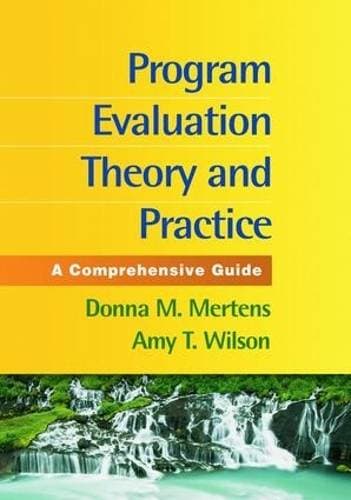
This engaging text takes an evenhanded approach to major theoretical paradigms in evaluation and builds a bridge from them to evaluation practice. Featuring helpful checklists, procedural steps, provocative questions that invite readers to explore their own theoretical assumptions, and practical exercises, the book provides concrete guidance for conducting large- and small-scale evaluations. Numerous sample studies—many with reflective commentary from the evaluators—reveal the process through which an evaluator incorporates a paradigm into an actual research project. The book shows how theory informs methodological choices (the specifics of planning, implementing, and using evaluations). It offers balanced coverage of quantitative, qualitative, and mixed methods approaches.Useful pedagogical features include: *Examples of large- and small-scale evaluations from multiple disciplines. *Beginning-of-chapter reflection questions that set the stage for the material covered. *""Extending your thinking"" questions and practical activities that help readers apply particular theoretical paradigms in their own evaluation projects. *Relevant Web links, including pathways to more details about sampling, data collection, and analysis. *Boxes offering a closer look at key evaluation concepts and additional studies. *Checklists for readers to determine if they have followed recommended practice. Table of ContentI. The Landscape of Evaluation 1. Introduction to Evaluation: Defining Terms and Ethical Considerations 2. Framing Evaluation: Paradigms, Branches, and Theories II. Historical and Contemporary Evaluation Paradigms, Branches, Theories, and Approaches 3. The Postpositivist Paradigm and the Methods Branch 4. The Pragmatic Paradigm and the Use Branch 5. The Constructivist Paradigm and the Values Branch 6. The Transformative Paradigm and the Social Justice Branch III. Planning Evaluations 7. Working with Stakeholders: Establishing the Context and the Evaluand 8. Evaluation Purposes and Questions 9. Evaluation Designs 10. Data Collection Strategies and Indicators 11. Stakeholders, Participants, and Sampling 12. Data Analysis and Interpretation IV. Implementation in Evaluation 13. Communication and Utilization of Findings 14. Meta-Evaluation and Project Management 15. Perennial and Emerging Issues in Evaluation Glossary Review Quote"Written in clear, jargon-free prose, this is a coherent and pragmatic guide for students and practitioners in any discipline who are involved in evaluation theory and practice. Doing justice to the various branches and theories informing evaluation practice, the text presents real-world evaluation examples and lessons with an acute understanding of the limitations and politics that evaluators must navigate. Its strong pedagogical apparatus encompasses graphic organizers, application exercises, Web resources, and self-reflection questions, all grounded in concrete examples and applications from across fields and disciplines. Mertens and Wilson’s book is a boon for graduate students and teachers."--Sharona A. Levy, DPhil, Chair and Director, SEEK (Search for Education, Elevation, and Knowledge) Program, Brooklyn College, City University of New York"I was pleased to see the broad scope of this book, which sets it apart from many others that focus on a single aspect of evaluation. The authors put evaluation in its proper historical context before moving on to methodology and the planning and implementation phases of this unique type of research. The book stimulates critical thinking while helping readers become more savvy producers and consumers of research."--Wendy L. Hicks, PhD, Department of Criminal Justice, Loyola University New Orleans"This text provides a comprehensive, thorough presentation of program evaluation as an enterprise with a rich history, diverse perspectives, and widely varied applications. Among the best features of this text is the consistent use of well-conceived questions to transition readers' thinking between chapters and constantly challenge them to consider multiple perspectives. The text strikes a good balance between epistemological and theoretical understanding and practical applications."--Steven R. Rogg, PhD, Lesson Study Alliance, Chicago, Illinois"Standing out in a sea of evaluation texts, this book takes evaluation training to another level. It provides a solid, coherent discussion of the field in the 21st century. Mertens and Wilson address step-by-step methodological considerations in conducting evaluations, with special attention to the transformative paradigm. Illustrating how mixed method evaluations are conducted in a variety of settings, the book goes beyond buzzwords to demonstrate concrete strategies that are used in the field. What really sets this book apart is the opportunity it affords students and practicing evaluators to think through their evaluation practices more deeply, considering not only the methods they use but also the general philosophy that drives every evaluation they conduct. A 'must have' for students, scholars, and practitioners."--Katrina L. Bledsoe, PhD, Education Development Center, Inc., Washington, DC"A refreshing feature of this text is its coverage of philosophical perspectives and their relationship to evaluation approaches. The book makes an important contribution in helping readers understand their own views of evaluation and how paradigms shape the evolution of evaluation theory. The organization of evaluation paradigms into four branches--the methods, use, values, and social justice branches--offers a useful analytic lens that accurately represents current directions in the field."--Linda B. Schrader, Department of Educational Leadership and Policy Studies, Florida State University"Mertens and Wilson want students to think about and actively decide what theoretical and philosophical position they will take in their evaluation practice: post-positivist, constructivist, pragmatic, or transformative. Evaluation examples combined with provocative questioning will challenge what students think they know and how they know it. Preparation for undertaking an evaluation does not stop here--Mertens and Wilson continue to raise issues of politics, power, and privilege as they take students through planning and implementing an evaluation. As expected, Mertens and Wilson have provided an exposition of evaluation that has both style and worth."--Fiona Cram, PhD, Director, Katoa Ltd, New ZealandReview Quote"Written in clear, jargon-free prose, this is a coherent and pragmatic guide for students and practitioners in any discipline who are involved in evaluation theory and practice. Doing justice to the various branches and theories informing evaluation practice, the text presents real-world evaluation examples and lessons with an acute understanding of the limitations and politics that evaluators must navigate. Its strong pedagogical apparatus encompasses graphic organizers, application exercises, Web resources, and self-reflection questions, all grounded in concrete examples and applications from across fields and disciplines. Mertens and Wilson’s book is a boon for graduate students and teachers." - Sharona A. Levy, Chair and Director, SEEK (Search for Education Elevation and Knowledge) Program, Brooklyn College, City University of New York, USA "This text provides a comprehensive, thorough presentation of program evaluation as an enterprise with a rich history, diverse perspectives, and widely varied applications. Among the best features of this text is the consistent use of well-conceived questions to transition readers' thinking between chapters and constantly challenge them to consider multiple perspectives. The text strikes a good balance between epistemological and theoretical understanding and practical applications." - Steven R. Rogg, Lesson Study Alliance, Illinois, USA"A refreshing feature of this text is its coverage of philosophical perspectives and their relationship to evaluation approaches. The book makes an important contribution in helping readers understand their own views of evaluation and how paradigms shape the evolution of evaluation theory. The organization of evaluation paradigms into four branches – the methods, use, values, and social justice branches – offers a useful analytic lens that accurately represents current directions in the field." - Linda B. Schrader, Florida State University, USA"The inclusion of sample studies in the chapters is an excellent way to show students the process through which an evaluator incorporates a paradigm into an actual research project, and the impact on the evaluator's methods and approach. I thoroughly enjoyed the reflective commentaries from the researchers who conducted the sample studies; this is a unique feature that I haven't seen in any other text. I also like the 'extending your thinking' activities, which provide students the opportunity to make use of the material presented in each chapter. The text stimulates critical thinking while helping readers become more savvy producers and consumers of research. Ample space is devoted to real-world concerns that are relevant to students' lives, such as why different 'experts' come to such different conclusions about hot issues discussed in the media. By addressing questions like this, instructors can delve into issues of ethics, politics, bias, and cultural perspective. I am eager to try this text in my courses." - Wendy L. Hicks, Loyola University, New Orleans, USA"Standing out in a sea of evaluation texts, this book takes evaluation training to another level. It provides a solid, coherent discussion of the field in the twenty-first century. Mertens and Wilson address step-by-step methodological considerations in conducting evaluations, with special attention to the transformative paradigm. Illustrating how mixed method evaluations are conducted in a variety of settings, the book goes beyond buzzwords to demonstrate concrete