Description
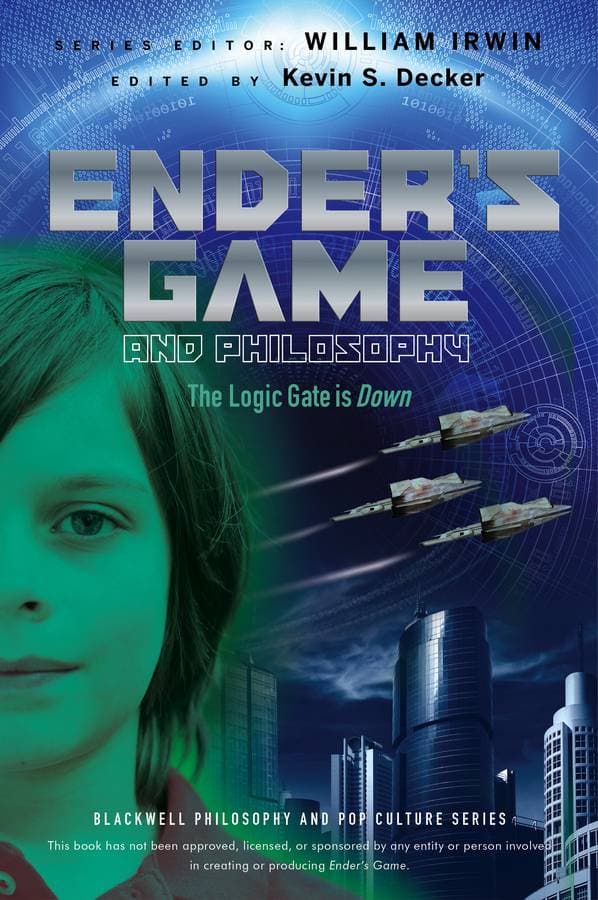
A threat to humanity portending the end of our species lurks in the cold recesses of space. Our only hope is an eleven-year-old boy. Celebrating the long-awaited release of the movie adaptation of Orson Scott Card’s novel about highly trained child geniuses fighting a race of invading aliens, this collection of original essays probes key philosophical questions raised in the narrative, including the ethics of child soldiers, politics on the internet, and the morality of war and genocide. Original essays dissect the diverse philosophical questions raised in Card’s best-selling sci-fi classic, winner of the Nebula and Hugo Awards and which has been translated in 29 languages Publication coincides with planned release of major motion picture adaptation of Ender’s Game starring Asa Butterfield and Harrison Ford Treats a wealth of core contemporary issues in morality and ethics, including child soldiers, the best kind of education and the use and misuse of global communications for political purposes A stand-out addition to the Blackwell Philosophy and Pop Culture series Table of Content Introduction: What Is Ender’s Game? 1 Part One THIRD: The Making of an Impossible Child 7 1 “The Teachers Got Me Into This”: Educational Skirmishes … with a Pinch of Freedom 9 Cam Cobb 2 Illusions of Freedom, Tragedies of Fate: The Moral Development of Ender Wiggin 21 Jeremy Proulx 3 Xenocide’s Paradox: The Virtue of Being Ender 32 Jeff Ewing 4 Teaching to the Test: Constructing the Identity of a Space Commander 41 Chad William Timm Part Two GAME: Cooperation or Confrontation? 53 5 The Enemy’s Gate Is Down: Perspective, Empathy, and Game Theory 55 Andrew Zimmerman Jones 6 War Games as Child’s Play 66 Matthew Brophy 7 Forming the Formless: Sunzi and the Military Logic of Ender Wiggin 78 Morgan Deane 8 Do Good Games Make Good People? 89 Brendan P. Shea Part Three HIVE-QUEEN: All Together Now 99 9 Bugger All!: The Clash of Cultures in Ender’s Game 101 Cole Bowman 10 Why Ender Can’t Go Home: Philotic Connections and Moral Responsibility 112 Brett Chandler Patterson 11 Of Gods and Buggers: Friendship in Ender’s Game 124 Jeffery L. Nicholas Part Four WAR: Kill or Be Killed 137 12 “I Destroy Them”: Ender, Good Intentions, and Moral Responsibility 139 Lance Belluomini 13 Ender’s Beginning and the Just War 151 James L. Cook 14 “You Had to Be a Weapon, Ender … We Aimed You”: Moral Responsibility in Ender’s Game 163 Danielle Wylie 15 The Unspoken Rules of Manly Warfare: Just War Theory in Ender’s Game 175 Kody W. Cooper Part Five HEGEMON: The Terrible Things Are Only About to Begin 187 16 Locke and Demosthenes: Virtually Dominating the World 189 Kenneth Wayne Sayles III 17 Ender’s Dilemma: Realism, Neoliberalism, and the Politics of Power 202 Ted Henry Brown and Christie L. Maloyed 18 People Are Tools 212 Greg Littmann Convening Authorities of the Court Martial of Colonel Hyrum Graff 224 The Ansible Index 230Biographical Note Kevin S. Decker is Associate Professor of Philosophy and Associate Dean of the College of Arts, Letters, and Education at Eastern Washington University, USA. He specializes in researching American pragmatism, Continental philosophy, ethics, philosophy in popular culture, and social theory. Professor Decker has co-edited a string of books on the links between philosophy and popular culture, including Star Wars and Philosophy (2005, with Jason T. Eberl), Star Trek and Philosophy (2008, also with Jason T. Eberl), and, with Richard Brown, Terminator and Philosophy (Wiley-Blackwell 2009). William Irwin is Professor of Philosophy at King’s College in Pennsylvania. He originated the philosophy and popular culture genre of books as coeditor of the bestselling The Simpsons and Philosophy and has overseen recent titles including Superman and Philosophy, Black Sabbath and Philosophy, and Spider-Man and Philosophy. Is the deception and manipulation of Andrew “Ender” Wiggin morally justified? Is it ethical to use brilliant children as soldiers? Can there ever really be peace between two completely different cultures? Does Ender’s ‘final solution’ in the destruction of the ‘buggers’ accord with the ethics of conducting warfare? Few books are considered to be both the best science fiction novel of all time, and useful for teaching actual military strategy. Orson Scott Card’s Ender’s Game is just such a book, depicting highly trained child geniuses saving the world from insect-like alien ‘buggers’. Timed for its release to coincide with the release of a motion picture adaptation of the novel, this book dissects key questions raised by Card and his legions of fans, including the ethics of child soldiers, the morality of tactics and technology in warfare, genocide, interspecies communication, and much more. The contemporary relevance of Ender’s Game can hardly be overstated: until recently it was on the US Marine Corps professional reading list. This compelling collection unpicks the warp and woof of philosophical references that form the novel’s themes and narrative arc, and is a major addition to the Blackwell Philosophy and Pop Culture series.