Description
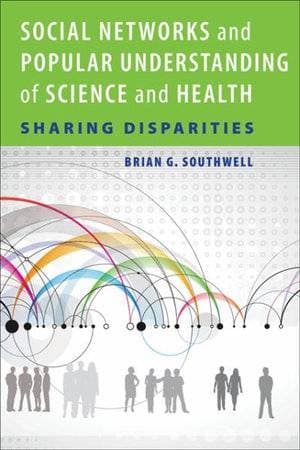
Using social media and peer-to-peer networks to teach people about science and health may seem like an obvious strategy. Yet recent research suggests that systematic reliance on social networks may be a recipe for inequity. People are not consistently inclined to share information with others around them, and many people are constrained by factors outside of their immediate control. Ironically, the highly social nature of humankind complicates the extent to which we can live in a society united solely by electronic media. Stretching well beyond social media, this book documents disparate tendencies in the ways people learn and share information about health and science. By reviewing a wide array of existing research - ranging from a survey of New Orleans residents in the weeks after Hurricane Katrina to analysis of Twitter posts related to H1N1 to a physician-led communication campaign explaining the benefits of vaginal birth - Brian G. Southwell explains why some types of information are more likely to be shared than others and how some people never get exposed to seemingly widely available information. This book will appeal to social science students and citizens interested in the role of social networks in information diffusion and yet it also serves as a cautionary tale for communication practitioners and policymakers interested in leveraging social ties as an inexpensive method to spread information.Table of ContentAcknowledgments1. Introduction2. Evidence of Inequality in Information Sharing3. A Catalogue of Information-Sharing Behaviors4. Who One Is Matters: Individual-Level Factors5. Where One Is Matters: Community-Level Factors6. What Information Matters: Content-Level Factors7. The Consequences of Information Sharing8. Remedies and RealismReferencesAbout the AuthorIndexReview QuoteSouthwell has made major contributions to our understanding of the roles that social processes play in driving the diffusion and impact of science- and health-related information. Concise and empirically grounded, Social Networks and Popular Understanding of Science and Health cautions against widespread reliance on peer-to-peer sharing strategies to disseminate vital information. In doing so, it challenges all of us-scientists, educators, and policy-makers-to think more critically and creatively about the potential for our communication efforts to increase disparities in access to information that can help people live healthier lives in a healthier world. Science Readers of Social Networks and Popular Understanding of Science and Health: Sharing Disparities are likely to come away better informed and inspired. -- Michelle Shumate Health CommunicationBiographical NoteBrian G. Southwell is a senior research scientist at RTI International, a nonprofit research institute headquartered in Research Triangle Park, North Carolina. He also holds faculty appointments at the University of North Carolina at Chapel Hill and Duke University.Southwell's thoughtful and empirically-based critique of how social media may actually exacerbate inequalities makes a significant contribution to the literature but also has profound implications for policy and practice. -- K. "Vish" Viswanath, Harvard School of Public Health and the Dana-Farber Cancer Institute Southwell's book upends the assumption that we are all connected in this age of information, pointing to the glaring differences among the haves and the have-nots. Those who do not have ready access to critical information are disadvantaged, and thus the rending disparities are made worse; the chasm deepens. Southwell presents a concise, well-researched argument for the various influences on information sharing and argues that we must confront the great myth of the internet age: that there is now a level playing field for everyone. -- Julie Barroso, School of Nursing, Duke University It took years for us to get over the assumption that the whole world is watching. Now, Southwell is helping us get over the 'small world' assumption-that we're all equally networked. This book gathers dozens of studies on how, when, where, and why information does and doesn't travel, and what we know about overcoming the resultant inequalities. -- Elihu Katz, University of Pennsylvania and Hebrew University of Jerusalem An absorbing book... Southwell eloquently explains what few will have realized: that the explosion of opportunities to share knowledge through social media appears to exacerbate disparities in public understanding of health and science, rather than level the field. He challenges us to think more deeply about strategies for public communication that would prevent those most socio-economically disadvantaged from being left even further behind. -- Melanie Wakefield, Director, Centre for Behavioural Research in Cancer, Cancer Council Victoria, Melbourne, Australia Southwell is a leading expert on communication about science and health. This book is necessary reading for anyone interested in human survival and well-being and how communication through mass media and via social networks affects both. -- James Druckman, Northwestern University, and former editor of Public Opinion Quarterly Southwell provides critical frameworks and findings regarding health and social media. Digitally enabled by social media tools, peer-to-peer connections can amplify voices by shaping health content and user experiences. -- Fay Cobb Payton, North Carolina State University, and Founder and Director of My Health Impact NetworkSouthwell’s thoughtful and empirically-based critique of how social media may actually exacerbate inequalities makes a significant contribution to the literature but also has profound implications for policy and practice.—K. "Vish" Viswanath, Harvard School of Public Health and the Dana-Farber Cancer InstituteSouthwell’s book upends the assumption that we are all connected in this age of information, pointing to the glaring differences among the haves and the have-nots. Those who do not have ready access to critical information are disadvantaged, and thus the rending disparities are made worse; the chasm deepens. Southwell presents a concise, well-researched argument for the various influences on information sharing and argues that we must confront the great myth of the internet age: that there is now a level playing field for everyone.—Julie Barroso, School of Nursing, Duke UniversityIt took years for us to get over the assumption that the whole world is watching. Now, Southwell is helping us get over the 'small world' assumption—that we’re all equally networked. This book gathers dozens of studies on how, when, where, and why information does and doesn’t travel, and what we know about overcoming the resultant inequalities.—Elihu Katz, University of Pennsylvania and Hebrew University of JerusalemAn absorbing book . . . Southwell eloquently explains what few will have realized: that the explosion of opportunities to share knowledge through social media appears to exacerbate disparities in public understanding of health and science, rather than level the field. He challenges us to think more deeply about strategies for public communication that would prevent those most socio-economically disadvantaged from being left even further behind.—Melanie Wakefield, Director, Centre for Behavioural Research in Cancer, Cancer Council Victoria, Melbourne, AustraliaSouthwell is a leading expert on communication about science and health. This book is necessary reading for anyone interested in human survival and well-being and how communication through mass media and via social networks affects both.—James Druckman, Northwestern University, and former editor of Public Opinion QuarterlySouthwell provides critical frameworks and findings regarding health and social media. Digitally enabled by social media tools, peer-to-peer connections can amplify voices by shaping health content and user experiences.—Fay Cobb Payton, North Carolina State University, and Founder and Director of My Health Impact Network