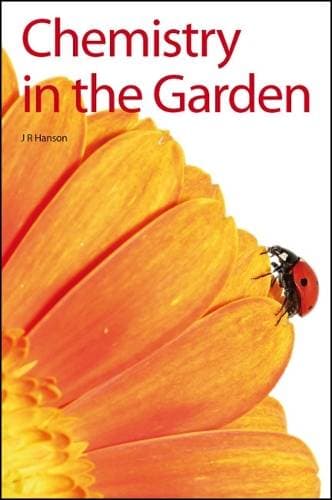
Chemistry in the Garden β€” image 1
Science

Chemistry in the Garden

Sold byBooks for Life

SKU: 9781847557933

S$32.29
Only 10 left in stock
1

Description

The aim of this book is to describe some aspects of the chemistry and chemical ecology which are found in the garden. In the garden there are numerous interactions between plants, the soil and with other organisms in which chemistry plays a central mediating role. The discussion concerns several of the chemically and ecologically interesting compounds that are produced by common ornamental garden plants and vegetables and by the predators that attack them. Many chemists are amateur gardeners and this book is directed at them as well as those with a general interest in the scientific processes involved in the garden.Table of ContentPreface: Chapter 1: Introduction; Chemical diversity in plants; The structure elucidation of natural products; The ecological role of natural products; Changes in the garden; Chapter 2: The biosynthetic relationships of natural products; Polyketides; Terpenoids; Phenylpropanoids; Alkaloids; Chapter 3: Natural products and plant biochemistry in the garden; The structural materials of plants; Photosynthesis; Oxidative co-enzymes; Plant hormones; Chapter 4: Garden soils; The mineral structure of the soil; The organic content of the soil; Nutrients from the soil; The role of pH; Fertilizers and compost; Microbial interactions within the soil; Chapter 5: The colour and scent of garden plants; Colouring matters; The carotenoids; The anthocyanins; Natural pigments; Floral and leaf scents; Chapter 6: Bioactive compounds from ornamental plants; Compounds from the Lamiaceae; Constituents of bulbs; Toxic compounds from ornamental plants; Compounds from ornamental trees; Mistletoe; Conifers; Chapter 7: Natural products in the vegetable and fruit garden; Root vegetables; Onions, garlic and asparagus; The brassicas; Lettuce; The legumes; Rhubarb; Tomatoes; Fruit trees; Soft fruit; Chapter 8: Fungal and insect chemistry in the garden; Microbial interactions; Lichens; Mycorrhizal and endophytic organisms; Interactions between fungi; Insect chemistry in the garden; Epilogue; Further Reading; Glossary; IndexReview Quote"""An impressive feature of this book is its coverage of bread and butter substances, such as the properties that make cellulose such an important structural material.""""The book includes a through index and has a good bibliography.""""Priced at ΓΊ14.95, this is expecially good value for a hardback. I recommend this book to A-Level teachers not just for themselves, but also to give to students who want to discover organic chemistry beyond that in the A-Level chemistry specifications."""Review Quote"The amount of information that is squeezed into this short book (just 146 pages) is remarkable.....full of interesting facts and figures, relating to plants commonly grown in gardens: did you know that over 800 compounds have been isolated from wine matured in oak barrels?This book is easier to read than most scientific literature, and provides a concise introduction for anyone wishing to study any aspect of plant chemistry......It is an enjoyable read and it succeeds in its aim: 'to show that there is chemistry in every part of the garden."Review Quote"James Hanson a recognized authority on natural products chemistry seeks to pass on not just his knowledge of the subject but also the excitement of seeing chemistry in action.....he illustrates the intricate chemical balances in the biosphere.If you have ever wondered why strawberries are red or why it is difficult to make jam from them, then this book will enlighten you. Anyone suffering from the delusion that ""natural"" equates with ""safe"" should read Chapter 6 on bioactive materials from ornamental plants.There is a very good general introduction to the subject of biosynthesis for those unfamiliar with it, and some more detail on selected aspects, which will interest the natural products chemist. There is a glossary of botanical terms.....a good list of suggested further reading and, very importantly, a comprehensive index."Biographical NoteProfessor J R Hanson FRSC is Emeritus Professor of Chemistry at the University of Sussex. Early work on gibberellic acid at ICI has lead to a long and successful career in natural product and organic chemistry, documented by numerous research papers and books. In 2008 Professor Hanson received a Service Award from the RSC journal Natural Product Reports for his dedicated contribution to the journal, as author and editorial board member. Professor Hanson continues to teach chemistry and biochemistry and is a keen gardener.In the garden there are numerous interactions between plants, the soil and with other organisms in which chemistry plays a central mediating role. The aim of this book is to describe some aspects of the chemistry and chemical ecology which are found in the garden. The discussion concerns several of the chemically and ecologically interesting compounds that are produced by common ornamental garden plants and vegetables and by the predators that attack them. Well written and clearly explained, this book will make fascinating reading for the chemist with an interest in gardening as well as the gardener with a general interest in the scientific processes involved in the garden.

Specifications

ISBN-13
9781847557933
Author
Chris Brickell
Publisher
Royal Society of Chemistry
Publication Date
2009-06-18
Binding
paperback
Condition
new
Pages
157
Language
english
Country of Origin
United States
Weight (g)
320
Height (mm)
30
Length (mm)
234
Width (mm)
156

Frequently Asked Questions

Standard shipping to Singapore typically takes 1–2 business days after dispatch. Express options are available at checkout.

We offer a 30-day return window for most products. Items must be unused, in their original packaging, and accompanied by proof of purchase to qualify for a full refund.

We accept all major credit and debit cards (Visa, Mastercard, American Express), as well as Apple Pay and Google Pay. All transactions are processed securely via Stripe and charged in SGD.

Yes β€” we never store your card details. All payments are handled by Stripe, a PCI-DSS Level 1 certified payment processor, using industry-standard TLS encryption.

Some products can be backordered β€” you will see a note on the product page if this is the case. We will ship as soon as stock arrives and keep you updated via email.

Once your order is dispatched you will receive a shipping confirmation email containing your tracking number and a link to track your parcel in real time.


Customer Reviews

More in Science

See all β†’

More from Books for Life

See all β†’