Description
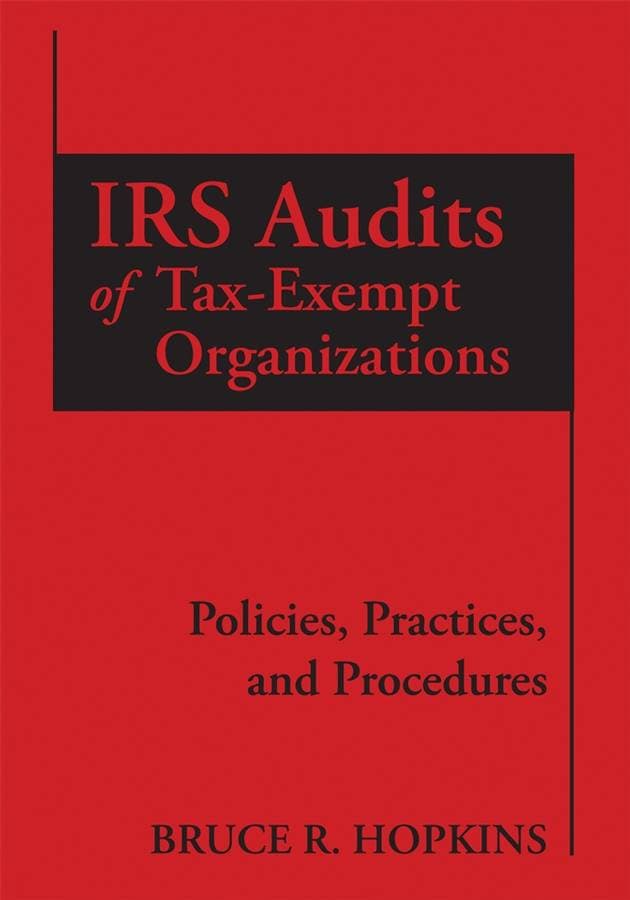
Written by Bruce Hopkins, the foremost expert on nonprofit law, this is your complete analysis of the procedures and practices of the IRS in its audits of tax-exempt organizations. Practical in presentation, this book offers advice on undergoing audits, details today's exempt organizations' issues, and authoritatively examines detailed documentation and citations, as well as numerous case studies, tips, forms, and checklists.Table of ContentPreface. 1. IRS Audits of Tax-Exempt Organizations – Fundamentals. § 1.1 Introduction to IRS Exempt Organizations Audit Procedures. § 1.2 Reasons for IRS Audits. § 1.3 IRS Audit Issues – Introduction. § 1.4 IRS Audit Procedures in General. § 1.5 Tax-Exempt Organizations' Rights. § 1.6 Types of IRS Examinations. (a) Field Examinations. (b) Office and Correspondence Examinations. (c) Team Examinations. (d) Compliance Check Projects. § 1.7 IRS Audit Controversy. § 1.8 IRS Summons Authority. § 1.9 Technical Advice. (a) General Procedures in Exempt Organizations Context. (b) Pre-Submission Conferences. (c) Contents of TAM Requests. (d) Handling of TAM Requests. (e) Appeals of Decisions to Not Seek Advice. (f) Withdrawal of TAM Requests. (g) Conference Scheduling. (h) IRS Use of TAMs. (i) Effect of TAM. (j) Limited Retroactive Effect of TAM. (k) Future Use of TAMs. § 1.10 Closing Agreements. (a) Overall Purpose of Closing Agreements. (b) Authority and Function. (c) Scope. (d) Finality. (e) Closing Agreements in Exempt Organizations Context. § 1.11 Freedom of Information Act. § 1.12 Expansion of IRS Exempt Organizations Audit Activity. § 1.13 Current and Future Focus of IRS Exempt Organizations Audits. 2. Organization of IRS. § 2.1 Structure of Department of Treasury. (a) Treasury Department in General. (b) Treasury Inspector General for Tax Administration. § 2.2 IRS in General. § 2.3 Tax Exempt and Government Entities Division. (a) Overall Organization. (b) Customer Profile. (c) Operations. (d) Enforcement Function. § 2.4 Headquarters Mission. (a) Senior Technical Advisor. (b) Planning. (c) Finance. (d) Communications and Liaison. (e) Business Systems Planning. (f) Research and Analysis. § 2.5 Examinations Office. § 2.6 Customer Education and Outreach. § 2.7 Rulings and Agreements. § 2.8 Program Management. § 2.9 Customer Accounts Services. § 2.10 IRS Administrative Functions. § 2.11 Appeals. (a) Organization, Priorities, and Mission. (b) Appeals Function and Tax-Exempt Organizations. § 2.12 Office of National Taxpayer Advocate. (a) Mission Fulfillment. (b) Organization. (c) General Rules. (d) Systemic Advocacy. (e) TAS and Tax-Exempt Organizations. § 2.13 Practice Before IRS. 3. Managing Tax-Exempt Organizations IRS Audits. § 3.1 Pre-Audit Precautions. (a) Review Governing Instruments. (b) Review Operations. (c) Review Books and Records. (d) Review Publications. (e) Review Correspondence. (f) Review Minutes. (g) Review Federal Returns. (h) Review Contracts. (i) Conflict-of-Interest Policy. (j) Other Documents. (k) Review Web Site. (l) Employment Taxes. (m) Media Coverage. (n) Testaments. (o) Governance. (p) Legal Audit. § 3.2 Winning Audit Lottery: Initial Steps and Reactions. (a) Telephone Call. (b) Notice of Examination. (c) Documents Requested. (d) Get Organized. (e) Contact Person. (f) Communications Strategy. (g) Know the Cast. (h) Office Facilities for IRS. (i) Initial and Other Interviews. (j) First Impressions. § 3.3 Audit Unfolds: Ongoing Steps. (a) Documents. (b) Stay Calm, Things Take Time. (c) Audit Outcomes. (d) Perspective. § 3.4 Power of Attorney. § 3.5 Interacting with IRS Examiners. (a) Coping with Examiners. (b) Tours. (c) Point Person. (d) Documents. § 3.6 Documents Likely to be Requested. § 3.7 Qualified Amended Returns. § 3.8 Issue Elevation. (a) Definition of Elevation. (b) Definition of Issue. (c) Why Issues Are Elevated. (d) Elevation to Inform Managers or Executives. (e) Elevation to Obtain Decision. (f) Issues That Are Candidates for Elevation. (g)Referral to or Consultation with Counsel. § 3.9 Appeals. (a) IRS District Office Action. (b) Regional Office Appeal. (c) Proposed Additional Tax. § 3.10 Parade of IRS Forms. § 3.11 Statute of Limitations. § 3.12 An Unwanted Outcome. § 3.13 Litigation. (a) General Rules. (b) Declaratory Judgment Rules. (c) Other Approaches. 4. IRS Compliance Check Projects, § 4.1 Compliance Check Projects Programs. § 4.2 Concept of Market Segment Study. § 4.3 Executive Compensation Compliance Initiative. (a) Law Backdrop. (b) Background. (c) Methodology. (d) Examination Phase. (e) Findings. (f) Conclusions. (g) Lessons Learned and Recommendations. § 4.4 Political Activities Compliance Initiative. (a) Law Backdrop. (b) 2004 Election Initiatives. (c) 2006 Election Initiatives. (d) 2007 Update. § 4.5 Hospital Compliance Project. (a) Law Backdrop. (b) Methodology and Process. (c) TIGTA Review. (d) Interim Report. (e) Future Developments. § 4.6 Intermediate Sanctions Compliance Reporting. (a) Law Backdrop. (b) Compliance Project. § 4.7 Fundraising Costs Reporting. (a) Law Backdrop. (b) Compliance Project. § 4.8 Tax-Exempt Bonds Recordkeeping Compliance. (a) Law Backdrop. (b) Compliance Project. 5. IRS Tax-Exempt Organizations Examination Procedures. § 5.1 Director, Exempt Organizations Examinations. § 5.2 Planning, Classifying, and Selecting Returns; Processing Claims. (a) Inventory and Classification System. (b) Examination Process. (c) Claims Processing. (d) Joint Committee Claim Cases. § 5.3 Information Items. (a) Definitions and Sources. (b) General Procedures. (c) Classification Procedures. (d) Referral Committee. § 5.4 Other IRS Pre-Examination Processes. (a) Record-Keeping System. (b) Case Assignment Guide. (c) Pre-Examination Guidelines. (d) Examination Objectives. (e) Beginning of Examination Process. (f) Group Manager Involvement. (g) Statute of Limitations. § 5.5 Examination Cycle. § 5.6 Conflicts of Interest. § 5.7 Prohibition on Executive Branch Influence. § 5.8 Consecutive Examinations. § 5.9 Repetitive Examinations. § 5.10 Return Surveys. § 5.11 Pre-Examination Procedures – Overview. § 5.12 Review of Return. § 5.13 Review of Accompanying IRS Documents. § 5.14 Determination File. § 5.15 Research and Assistance. § 5.16 Case Chronology Record. § 5.17 Workpaper Summary. § 5.18 Commencement of Examination. (a) Initial Taxpayer Contact. (b) On-Site Examinations. (c) Limited Scope Examinations. (d) Evaluation of Internal Controls. (e) Examiner Workpapers. (f) Examination Techniques. (g) Initial Interview. (h) Third-Party Contacts. (i) Taxpayer Confidentiality Privilege. (j) Place of Examination. § 5.19 Examination Unfolds. (a) Tour of Facilities. (b) Examination of Documents. (c) Sampling Techniques. (d) Income Analysis. (e) Disbursement Analysis. (f) Filing Requirements. (g) Expense Allocations. (h) Balance Sheet Analysis. (i) Tax Liabilities. (j) Accuracy of Return. (k) Penalties. (l) Issue Development. (m) Exempt Organization-Caused Delays. (n) Developing and Documenting Facts. (o) Collecting and Recording Facts. (p) Preparation and Issuance of Summons. (q) Sharing of Issues. § 5.20 Burden of Proof. § 5.21 Revocation of Tax Exemption. § 5.22 Effective Date of Revocation or Modification. § 5.23 Technical Advice. § 5.24 Terminations. § 5.25 Inadequate Records. § 5.26 Revocation Due to Inadequate Records or Failure to Provide Requested Information. § 5.27 Issues Subject to Declaratory Judgment. § 5.28 IRS Inability to Locate Organization. § 5.29 Technical Advisor Issues. § 5.30 Suspended Issues. § 5.31 Law Research by Examiners. § 5.32 Closing Letters; Examination Reports. (a) Terminology. (b) Examination Report Forms. § 5.33 Examination Outcomes. (a) No-Change Examinations. (b) No-Change with Written Advisory Examinations. (c) Change Cases. (d) Presentation of Issues in Examination Reports. (e) Revocation of Exempt Status. (f) Modification of Exempt Status. (g) Reclassification of Public Charity, Foundation Status. (h) Modification of Operating Foundation Status. (i) Unrelated Business Issues. (j) Private Foundation Excise Taxes. (k)Non-Private Foundation Excise Taxes. (l) Non-Exempt Charitable Trusts Examinations. § 5.34 Claims. § 5.35 Basic IRS Examination Forms. (a) Explanation of Items. (b) Internal Transmittal Letter. (c) Report of Examination (Tax Changes). (d) Report of Examination (Status Changes). (e) Excise Tax Audit Changes. 6. Church Audits. § 6.1 Constitutional Law Background. § 6.2 Statutory Law Background. § 6.3 Statutory Law Overview. § 6.4 Inapplicability of Church Audit Procedures. § 6.5 Church Records. § 6.6 Church Tax Inquiries. (a) Reasonable Belief Standard. (b) Written Notice to Church. § 6.7 Church Tax Examinations. (a) Notice of Examination. (b) Scope of Examination. (c) Examination Outcomes. § 6.8 Summons Enforcement. § 6.9 Prototype Scenario. (a) IRS Becomes Suspicious. (b) Notice of Church Tax Inquiry. (c) Notice of Church Tax Examination. (d) Conference. § 6.10 Two-Year Completion Rule. § 6.11 Ninety-Day Completion Rule. § 6.12 Special Limitation Periods. § 6.13 Limitations on Additional Inquiries and Examinations. § 6.14 Limited Remedy for IRS Violation of Procedures. § 6.15 Exhaustion of Administrative Remedies Rule. § 6.16 Interplay with Intermediate Sanctions Rules. 7. Tax-Exempt Organization Examination Issues. § 7.1 Categories of Tax-Exempt Organizations. (a) Single-Parent Title-Holding Companies. (b) Charitable, Educational, and Like Organizations – General Rules. (c) Religious Organizations. (d) Private Schools. (e) Public Interest Law Firms. (f) Educational Organizations. (g) Scientific Organizations. (h) Amateur Athletic Sports Organizations. (i) Social Welfare Organizations. (j) Local Associations of Employees. (k) Labor Organizations. (l) Agricultural and Horticultural Organizations. (m) Business Leagues. (n) Social and Recreational Clubs. (o) Fraternal Societies. (p) Voluntary Employees' Beneficiary Associations. (q) Teachers' Retirement Fund Associations. (r) Mutual and Cooperativ