No variants available in Vietnam (VND).
Description
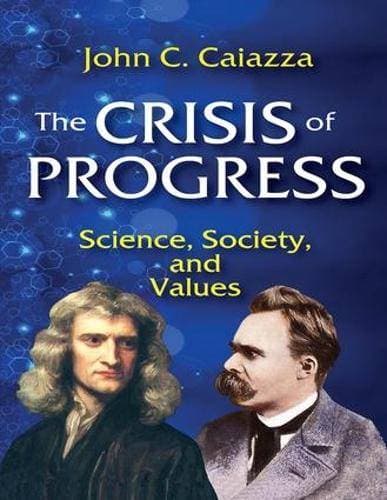
This book is about the concept of progress, its separate varieties, its current rejection, and how it may be reconsidered from a philosophical and scientific basis. John C. Caiazza's main emphasis is on how science is understood as it has a direct impact on social values as expressed by prominent philosophers. He argues that progress is at a standstill, which presents a crisis for Western civilization.Caiazza presents historical examples, both of scientific inquiry and social and cultural themes, to examine the subject of progress. Beginning with the Whig model and progressive political values exemplified by Bacon and Dewey, he also examines other variations, the Enlightenment, cosmopolitanism, and totalitarianism. Technology, argues Caiazza, also has a stultifying effect on Western culture and to understand the idea of progress, we must take a philosophic rather than a scientific point of view. Modern cosmology has inevitable humanistic and theological implications, and major contemporary philosophers reject social science in favour of ancient concepts of virtue and ethics.In the end, Caiazza writes that time is an agent, not a neutral plain on which scientific and historical events occur. We can expect technology to keep us in stasis or become aware of the possibility of transcendence. This book will be of interest for students of scientific history and philosophy.Table of Content1 Introduction: History and Impact of the Idea of Progress On Progress, Its Variations, and Rejection The Entanglement of Science and Social Values Three Themes2 Whig History and the Progressive Society Whig History and Critical History Evidence of Progress in Science 1: Discovery—Spectrography Evidence of Progress in Science 2: Theory—Mendel's Laws The Separation Thesis: Modern Science Departs from the Medieval World-View Leaving Aristotle, One Science at a Time The Projected Ideal Ends of Science Bacon's Prophetic Vision in the New Atlantis Science-Inspired Social Norms—Dewey's Progressivism3 Enlightenment Progress and the Cosmopolitan Society Enlightenment Variation of Scientific Progress Duhem's Continuity Challenge Duhem's Philosophy of Science and the Continuity Thesis Cultural and Social Criticism Koyre's Infinity Defense of Enlighted Science Causality and Mechanical Reason Kant on Diminished Reason and the Cosmopolitan Social Ideal4 Progress by Reduction and the Totalitarian Temptation Reduction in Full Reduction and the History of Science Anti-Reductionist Views Hobbes and the Totalitarian Temptation Reduction and Atheism5 Historicism, Relativism, and the Open Society From the Philosophy of Science to the History of Science Deep Patterns: Vico Global Wholes: Kuhn Historicist Idealism and Its Critics: Scheffler Meaning and Science History: Popper Historicism and Popper's Contentless "Open Society" The Open Society, Right and Left6 Where We Are Now: Technology and Culture Techno-Secularism Technology and Cultural Stasis Science Itself Digital Fantasy Replaces Lived Reality The Electronic Ego7 Philosophy, Progress, and Cosmology Modern Science and Philosophy in Contrast Three Examples of Scientists Doing Philosophy (and Theology) Is Not Naturalism a Philosophy? The Law of Diminishing Reductive Returns The Philosophic Timeline of Scientific Progress Wittgenstein, Toulmin, and Natural Theology8 Cosmology and Human Existence Cosmic Role of the Observer in Postmodern Physics Scientific Cosmology and Human Existence Two Concepts of God: Scientific and Religious Recent Science Reveals the Permanence of Natural Human Differences The Limits of Social Science—Nussbaum The Recovery of Ancient Virtue—MacIntyre9 Conclusion: Crisis, Time, and the Choice Crisis in Progress and Social Values Agentic Time The Nature of the Crisis: Pascal or Nietzsche?IndexBiographical NoteJohn C. Caiazza is senior lecturer in philosophy at Rivier University, USA. He is the author of The War of the Jesus and Darwin Fishes, The Ethics of Cosmology, and The Disunity of American Culture.