No variants available in Vietnam (VND).
Description
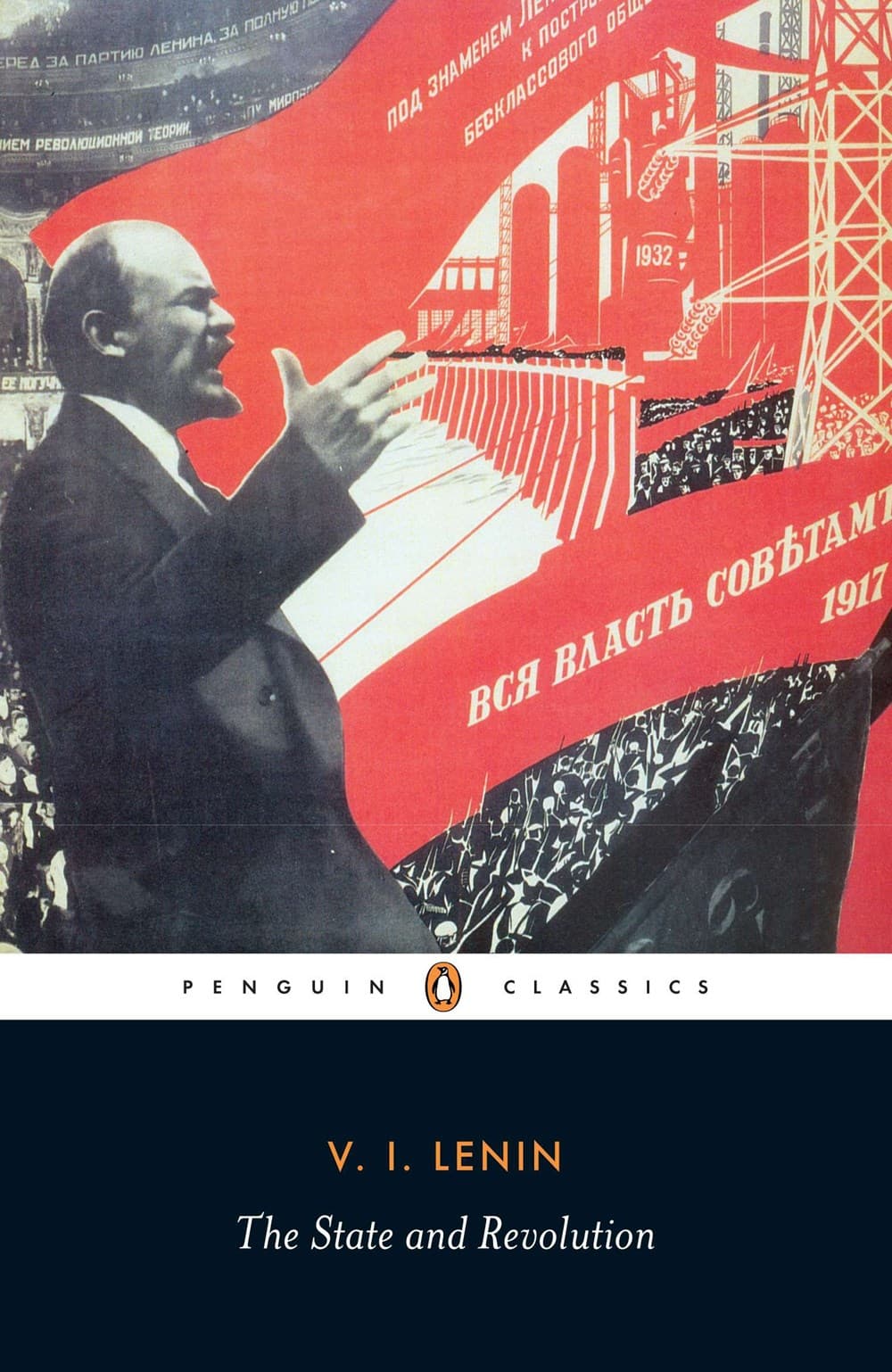
Summary: In July 1917, when the Provisional Government issued a warrant for his arrest, Lenin fled from Petrograd; later that year, the October Revolution swept him to supreme power. In the short intervening period he spent in Finland, he wrote his impassioned, never-completed masterwork The State and Revolution. This powerfully argued book offers both the rationale for the new regime and a wealth of insights into Leninist politics. It was here that Lenin justified his personal interpretation of Marxism, savaged his opponents and set out his trenchant views on class conflict, the lessons of earlier revolutions, the dismantling of the bourgeois state and the replacement of capitalism by the dictatorship of the proletariat. As both historical document and political statement, its importance can hardly be exaggerated.For more than seventy years, Penguin has been the leading publisher of classic literature in the English-speaking world. With more than 1,700 titles, Penguin Classics represents a global bookshelf of the best works throughout history and across genres and disciplines. Readers trust the series to provide authoritative texts enhanced by introductions and notes by distinguished scholars and contemporary authors, as well as up-to-date translations by award-winning translators. Author Bio: Vladimir Lenin was born in 1870 and was one of the most influential people of the 20th century. He became a Russian revolutionary, a communist politician, the principal leader of the October Revolution, the first head of the Russian Soviet Socialist Republic and, from 1922, the first de facto leader of the Soviet Union. Table of Contents:Translator's NotesIntroduction:The Writing of the BookThe ContentsThe StyleA Marxist Interpretation?The Book and Political TheoryPolitical Conditions at the TimeThe Book is PublishedThe Uses of the BookThe Book and Its FateTHE STATE AND REVOLUTIONPreface to the First EditionPreface to the Second EditionChapter I: Class Society and the State1. The State as the Product of the Irreconcilability of Class Contradictions2. Special Bodies of Armed Men, Prisons, Etc.3. The State as an Instrument for the Exploitation of the Oppressed Class4. The "Withering Away" of the State and Violent RevolutionChapter II: The State and Revolution—The Experience of 1848-511. The Eve of the Revolution2. The Revolution in Summary3. The Presentation of the Question by Marx in 1852Chapter III: The State and Revolution—The Experience of the Paris Commune of 1871—Marx's Analysis1. What was Heroic about the Communards' Attempt?2. With What is the Smashed State Machine to be Replaced?3. The Eradication of Parliamentarianism4. Organization of the Unity of the Nation5. The Destruction of the Parasite StateChapter IV: Continuation: Supplementary Clarifications by Engels1. The Housing Question2. The Polemic with the Anarchists3. Letter to Bebel4. Critique of the Draft of the Erfurt Programme5. The 1891 Preface to Marx's The Civil War in France6. Engels on the Overpowering of DemocracyChapter V: The Economic Basis for the Withering Away of the State1. The Presentation of the Question by Marx2. The Transition from Capitalism to Communism3. The First Phase of Communist Society4. The Higher Phase of Communist SocietyChapter VI: The Vulgarization of Marxism by the Opportunists1. Plekhanov's Polemic with the Anarchists2. Kautsky's Polemic with the Opportunists3. Kautsky's Polemic with PannekoekChapter VII: The Experience of the Russian Revolutions of 1905 and 1917 #unfinished text#Postscript to the First EditionGlossary