No variants available in Vietnam (VND).
Description
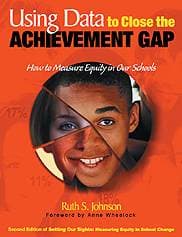
"Dr. Johnson′s work provides both the philosophical and practical blueprint for transforming public schools into the learning communities we want and need. Leaders will find the book to be the most useful document to guide and inform their efforts to close the gap and maximize learning for all students."Joseph Burke, Superintendent of SchoolsSpringfield Public SchoolsSpringfield, MA "If the goal of all students reaching high standards is to be met, Using Data to Close the Achievement Gap should be required reading for all teachers and administrators. It should also be an integral part of the course of study for those preparing to teach in the United States."Vinetta C. Jones, DeanSchool of Education, Howard University "From Johnson′s penetrating analysis of current research, policies, and practices, and her wealth of experiences working with school districts around the nation, she clearly makes the connection between using data and achieving equitable outcomes as districts and schools struggle to close the achievement gap."Aukram Burton, Diversity/Multicultural SpecialistGheen Professional Development AcademyLouisville, KY"This book represents a significant contribution to the national debate around school reform. Ruth Johnson presents a thoughtful, well-documented treatise on how educators, policymakers, and parents can use data to set achievement goals and to measure progress towards these goals."Walter Allen, ProfessorDepartment of Sociology, UCLA Exercise the power of data to identify and rectify educational inequalities! Student populations are diverse—however, their access to knowledge and success should not be. Unfortunately, statistics show that real disparities do exist in academic achievement, which consistently coincide with income level and race. In this comprehensive guide, Ruth S. Johnson highlights compelling evidence that these inequities can be linked to school practices that inadvertently increase inequities. The solution to this pervasive problem lies in the collection and examination of appropriate data, and this book shows readers how. This updated edition of Setting Our Sights: Measuring Equity in School Change now includes current studies, policies, and practices, and provides new sections on data dialogues and school indicators. It offers valuable assistance for understanding, visioning, planning, and executing tactics that can successfully close the gap in student achievement, including: Straightforward and in-depth discussions of the five stages for equity reform Clear and easy-to-understand explanations of research findings Practical tools including questionnaires, surveys, forms, and models Tips for effectively gathering, analyzing, and applying data Johnson shows how data is instrumental not only in targeting areas for improvement, but also in offering insights into the necessary steps to foster positive change and create a culture of high achievement for all students, especially those students who have traditionally been overlooked. An indispensable reference for any school undergoing a quality review process, this reader-friendly manual presents practical how-to′s for analyzing data and developing a strategy that empowers teachers and administrators with an equal opportunity for success.Table of ContentForeword: A Strategy to Challenge Inequality - Anne Wheelock Introduction: New to the Second Edition Acknowledgments About the Author Part I: Setting Our Sights on Student Achievement 1. The Achievement Gap: Framing Our Minds to Set Our Sights The Achievement Gap Some Other Considerations Rethinking the Issues: Creating the Conditions for Moving Forward Stages in the Change Process: How Data Offer Help and Hope 2. Building Dissatisfaction and Killing the Myths: Examining Data as a First Step Toward Motivating Reform The Broader Picture: Societal Implications of Undereducating Certain Populations Similar Aspirations, Unequal Chances: Data to Dispel Myths and Demonstrate Differential Expectations and Learning Opportunities for Students Who Has the Opportunity to Go to College? Changing Practices and Achievement Patterns: Exploding Myths That Perpetuate Underachievement 3. Data in the Reform Process: How and Why Key Roles for Data Assessing Data Use and Access Stages of the Data User Process Using Technology to Make Strong Presentations 4. Building Leadership and Data Teams Establishing the Need: A First Step for Highly Resistant Schools Creating the Team: The First Step in Most Schools The Role of the Leadership Team Structuring the Leadership Team′s Work Team Development The Data Team: Core to the The Data Team: Core to the School′s Success in Using Data to Achieve Reform Planning for Team Success: Team Self-Assessment of Strengths and Needs Assessing Perspectives of Team Effectiveness Planning for Team Leadership Development Part II: Inquiring About Equity 5. Talking About Data Why the Need for Dialogue Guiding the Dialogue Outcomes From Dialogues Conducting the Inquiry: Measurement Dimensions and Approaches 6. Examining Outcomes Looking at the Big Picture Outcome Data From Standardized Test Scores: Peeling the Data Standardized Tests for College Going Monitoring Student Grades Displaying Middle and High School Course Enrollment and Student Overall Progress in College Preparatory Courses Outcomes: Student Graduation Rates College-Going Rates Nonacademic Measures Related to Outcomes 7. Assessing Policies and Practices Part I: Instruments Assessing Perceptions of Attitudes, Readiness, and Commitment to Reform at the School Process Indicators Assessing Institutional Reform in the Academic Culture of Schools Other Instruments to Assess Equity Schools′ and Districts′ Assessments of Delivery of Precollege Guidance Characteristics of High-Performing and Low-Performing Counseling Programs Counselor College Preparatory Record Keeping for Individual Students Which Counselors Are Providing College Access to Students? Counselor′s Plans for Counselees Part II: Existing School Documents How Does the Master Schedule Reflect Practices and Goals? Assessing Documents, Policies, and Practices on How Time Is Used Examining School Calendars Teacher Plan Books Part III: Assessing Equitable Classroom Practices Survey--The Equitable School Classroom Teacher Observations Observing Students in Class and School Parent and Student Information 8. Listening to Student and Parent Voices Student and Parent-Guardian Questionnaires Aspirations and Reality Listening to Students′ Voices Regarding the Academic Culture of the School 9. Evaluating Programs and Interventions Analyses of Efforts to Raise Student Achievement Assessing Elementary Programs and Practices Assessing the Improvement of College Preparation and College-Going Rates Professional Development 10. Using School Indicators to Answer Critical Questions How and When to Gather Indicators Combining Indicators to Answer Critical Questions Sample Indicator Combinations 11. Will We Know It When We See It? Visioning, Planning, and Implementation Planning for Monitoring Plan for Monitoring the Improvement of College Preparation and College-Going Rates The Role of the External Resource Person Resources for Equitable School Reform Bibliography References IndexReview Quote"Dr. Johnson’s work provides both the philosophical and practical blueprint for transforming public schools into the learning communities we want and need. Leaders will find the book to be the most useful document to guide and inform their efforts to close the gap and maximize learning for all students." Review Quote"If the goal of all students reaching high standards is to be met, Using Data to Close the Achievement Gap should be required reading for all teachers and administrators. It should also be an integral part of the course of study for those preparing to teach in the United States."Review Quote"With this visionary and user-friendly resource in hand, all educators—teachers, counselors, and administrators—can and must make data part of a lifelong practice to ensure high achievement for all students."Review Quote"From her penetrating analysis of current research, policies, and practices, and her wealth of experiences working with school districts around the nation, Johnson clearly makes the connection between using data and achieving equitable outcomes as districts and schools struggle to close the achievement gap." Review Quote "This book represents a significant contribution to the national debate around school reform. Ruth Johnson presents a thoughtful, well-documented treatise on how educators, policy makers, and parents can use data to set achievement goals and measure school progress toward these goals."Biographical NoteRuth S. Johnson is a professor emeritus at California State University, Los Angeles. She has served in a variety of educational settings in New Jersey and California. Ruth received her Ed.D. in 1985 from Rutgers, The State University of New Jersey. Her dissertation was titled An Exploratory Study of Academic Labeling, Student Achievement and Student Ethnographic Characteristics. At the K–12 level, she served as a classroom teacher, an instructional consultant, a director of elementary education, an analyst, an assistant superintendent of schools in the areas of curriculum and business, and as a superintendent of schools. She initiated efforts that resulted in raising academic standards and student achievement in low performing school districts. She served as an education consultant for the New Jersey Department of Education and as a director for two non-profit organizations in California which focused on raising student achievement in underserved student populations. Her major scholarly interests and publications focus on processes related to changing the academic culture of urban schools, with an emphasis on access and equity. In addition to her four published books, she has written numerous book chapters, articles, editorials, research reports, and manuscript reviews.