No variants available in Vietnam (VND).
Description
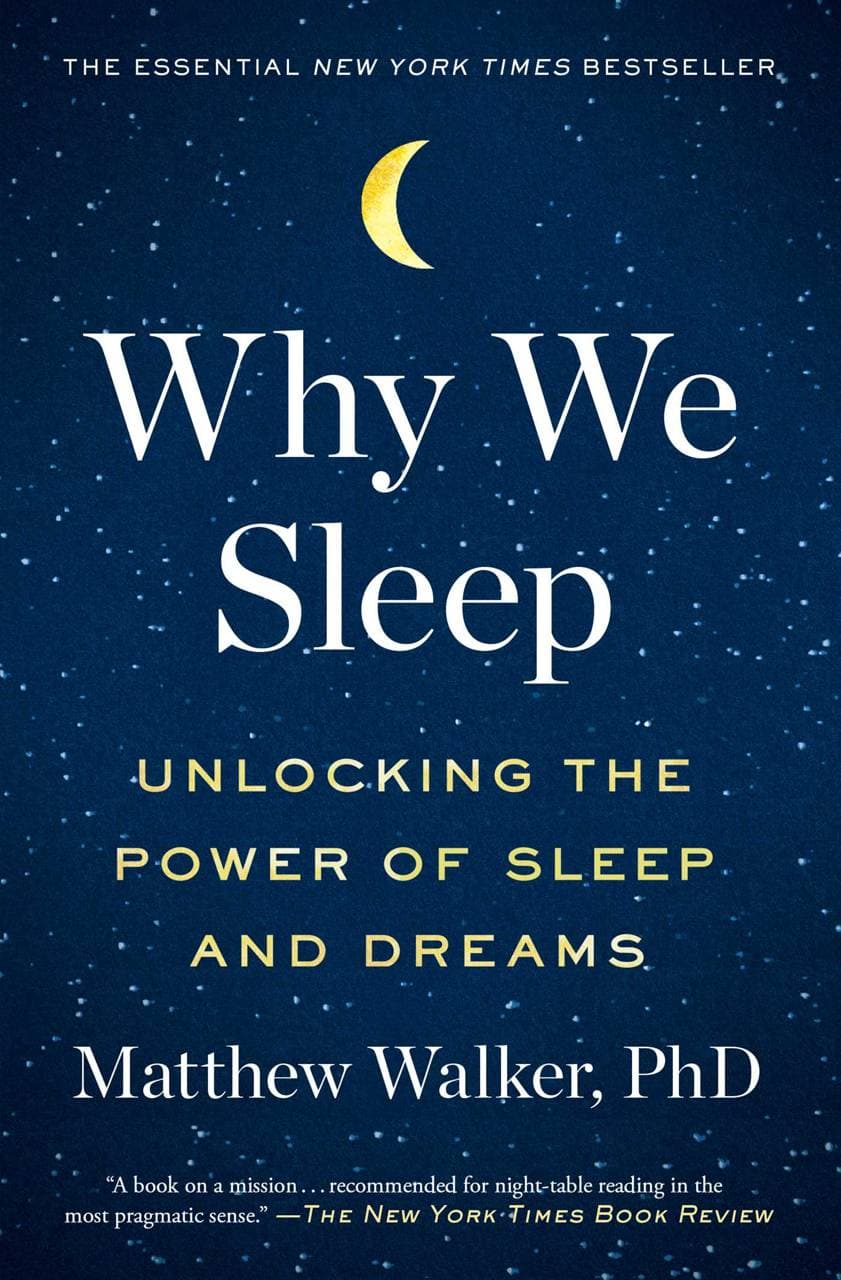
“Why We Sleep is an important and fascinating book…Walker taught me a lot about this basic activity that every person on Earth needs. I suspect his book will do the same for you.” —Bill Gates A New York Times bestseller and international sensation, this “stimulating and important book” (Financial Times) is a fascinating dive into the purpose and power of slumber.With two appearances on CBS This Morning and Fresh Air's most popular interview of 2017, Matthew Walker has made abundantly clear that sleep is one of the most important but least understood aspects of our life. Until very recently, science had no answer to the question of why we sleep, or what good it served, or why we suffer such devastating health consequences when it is absent. Compared to the other basic drives in life—eating, drinking, and reproducing—the purpose of sleep remains more elusive. Within the brain, sleep enriches a diversity of functions, including our ability to learn, memorize, and make logical decisions. It recalibrates our emotions, restocks our immune system, fine-tunes our metabolism, and regulates our appetite. Dreaming creates a virtual reality space in which the brain melds past and present knowledge, inspiring creativity. In this “compelling and utterly convincing” (The Sunday Times) book, preeminent neuroscientist and sleep expert Matthew Walker provides a revolutionary exploration of sleep, examining how it affects every aspect of our physical and mental well-being. Charting the most cutting-edge scientific breakthroughs, and marshalling his decades of research and clinical practice, Walker explains how we can harness sleep to improve learning, mood and energy levels, regulate hormones, prevent cancer, Alzheimer’s and diabetes, slow the effects of aging, and increase longevity. He also provides actionable steps towards getting a better night’s sleep every night. Clear-eyed, fascinating, and accessible, Why We Sleep is a crucial and illuminating book. Written with the precision of Atul Gawande, Andrew Solomon, and Sherwin Nuland, it is “recommended for night-table reading in the most pragmatic sense” (The New York Times Book Review).Biographical NoteMatthew Walker is a professor of neuroscience and psychology at UC Berkeley, the Director of its Sleep and Neuroimaging Lab, and a former professor of psychiatry at Harvard University. He has published over 100 scientific studies and has appeared on 60 Minutes, Nova, BBC News, and NPR’s Science Friday. Why We Sleep is his first book.Chapter 1: To Sleep… CHAPTER 1 To Sleep… Do you think you got enough sleep this past week? Can you recall the last time you woke up without an alarm clock feeling refreshed, not needing caffeine? If the answer to either of these questions is “no,” you are not alone. More than a third of adults in many developed nations fail to obtain the recommended seven to nine hours of nightly sleep.I I doubt you are surprised by this fact, but you may be surprised by the consequences. Routinely sleeping less than six hours a night weakens your immune system, substantially increasing your risk of certain forms of cancer. Insufficient sleep appears to be a key lifestyle factor linked to your risk of developing Alzheimer’s disease. Inadequate sleep—even moderate reductions for just one week—disrupts blood sugar levels so profoundly that you would be classified as pre-diabetic. Short sleeping increases the likelihood of your coronary arteries becoming blocked and brittle, setting you on a path toward cardiovascular disease, stroke, and congestive heart failure. Fitting Charlotte Brontë’s prophetic wisdom that “a ruffled mind makes a restless pillow,” sleep disruption further contributes to all major psychiatric conditions, including depression, anxiety, and suicidality. Perhaps you have also noticed a desire to eat more when you’re tired? This is no coincidence. Too little sleep swells concentrations of a hormone that makes you feel hungry while suppressing a companion hormone that otherwise signals food satisfaction. Despite being full, you still want to eat more. It’s a proven recipe for weight gain in sleep-deficient adults and children alike. Worse, should you attempt to diet but don’t get enough sleep while doing so, it is futile, since most of the weight you lose will come from lean body mass, not fat. Add the above health consequences up, and a proven link becomes easier to accept: relative to the recommended seven to nine hours, the shorter your sleep, the shorter your life span. The old maxim “I’ll sleep when I’m dead” is therefore unfortunate. Adopt this mind-set, and it is possible that you will be dead sooner and the quality of that (shorter) life will be worse. The elastic band of sleep deprivation can stretch only so far before it snaps. Sadly, human beings are in fact the only species that will deliberately deprive themselves of sleep without legitimate gain. Numerous components of wellness, and countless seams of societal fabric, are being eroded by our costly state of sleep neglect: human and financial alike. So much so that the Centers for Disease Control declared insufficient sleep as a public health epidemic. It may not be a coincidence that countries where sleep time has declined most dramatically over the past century, such as the US, the UK, Japan, and South Korea, and several in western Europe, are also those suffering the greatest increase in rates of the aforementioned physical diseases and mental disorders. Scientists such as myself have even started lobbying doctors to start “prescribing” sleep. As medical advice goes, it’s perhaps the most painless and enjoyable to follow. Do not, however, mistake this as a plea to doctors to start prescribing more sleeping pills—quite the opposite, in fact, considering the evidence surrounding the deleterious health consequences of these drugs. But can we go so far as to say that a lack of sleep can kill you outright? Quite posssibly—on at least two counts. First, there is a very rare genetic disorder that starts with a progressive insomnia, emerging in midlife. Several months into the disease course, the patient stops sleeping altogether. By this stage, they have started to lose many basic brain and body functions. Few drugs that we currently have will help the patient sleep. After twelve to eighteen months of no sleep, the patient will die. Second is the deadly circumstance of getting behind the wheel of a motor vehicle without having had sufficient sleep. Drowsy driving is the cause of hundreds of thousands of traffic accidents and fatalities each year. And here, it is not only the life of the sleep-deprived individuals that is at risk, but the lives of those around them. Tragically, one person dies in a traffic accident every hour in the United States due to a fatigue-related error. Society’s apathy toward sleep has, in part, been caused by the historic failure of science to explain why we need it. Sleep remained one of the last great biological mysteries. All of the mighty problem-solving methods in science—genetics, molecular biology, and high-powered digital technology—have been unable to unlock the stubborn vault of sleep. Minds of the most stringent kind, including Nobel Prize–winner Francis Crick, who deduced the twisted-ladder structure of DNA, famed Roman educator and rhetorician Quintilian, and even Sigmund Freud had all tried their hand at deciphering sleep’s enigmatic code, all in vain. To better frame this state of prior scientific ignorance, imagine the birth of your first child. At the hospital, the doctor enters the room and says, “Congratulations, it’s a healthy baby boy. We’ve completed all of the preliminary tests and everything looks good.” She smiles reassuringly and starts walking toward the door. However, before exiting the room she turns around and says, “There is just one thing. From this moment forth, and for the rest of your child’s entire life, he will repeatedly and routinely lapse into a state of apparent coma. It might even resemble death at times. And while his body lies still his mind will often be filled with stunning, bizarre hallucinations. This state will consume one-third of his life and I have absolutely no idea why he’ll do it, or what it is for. Good luck!” Astonishing, but until very recently, this was reality: doctors and scientists could not give you a consistent or complete answer as to why we sleep. Consider that we have known the functions of the three other basic drives in life—to eat, to drink, and to reproduce—for many tens if not hundreds of years now. Yet the fourth main biological drive, common across the animal kingdom—the drive to sleep—has continued to elude science for millennia. Addressing the question of why we sleep from an evolutionary perspective only compounds the mystery. No matter what vantage point you take, sleep would appear to be the most foolish of biological phenomena. When you are asleep, you cannot gather food. You cannot socialize. You cannot find a mate and reproduce. You cannot nurture or protect your offspring. Worse still, sleep leaves you vulnerable to predation. Sleep is surely one of the most puzzling of all human behaviors. On any one of these grounds—never mind all of them in combination—there ought to have been a strong evolutionary pressure to prevent the emergence of sleep or anything remotely like it. As one sleep scientist has said, “If sleep does not serve an absolutely vital function, then it is the biggest mistake the evolutionary process has ever made.”II Yet sleep has persisted. Heroically so. Indeed, every animal species carefully studied to date sleeps.III This suggests that sleep evolved with—or very soon after—life itself on our planet. Moreover, the sub